Moving off Chargebee is a customer-continuity project, not a data dump. Azotte mirrors your plans, subscriptions, and lifecycle state first, runs alongside Chargebee, then cuts over cohort by cohort. Billing history stays intact.
A Chargebee migration must protect access, renewal timing, cancellation state, coupon and trial logic, payment references, and storefront behavior. Azotte uses those invariants to shape the import and cutover order, so customers keep their subscription exactly as it was.
Mirror first. Cut over second.Pull Chargebee customers, plans, subscriptions, invoices, and discounts through the API. Mirror them in Azotte while Chargebee keeps billing, then move customers in controlled cohorts.
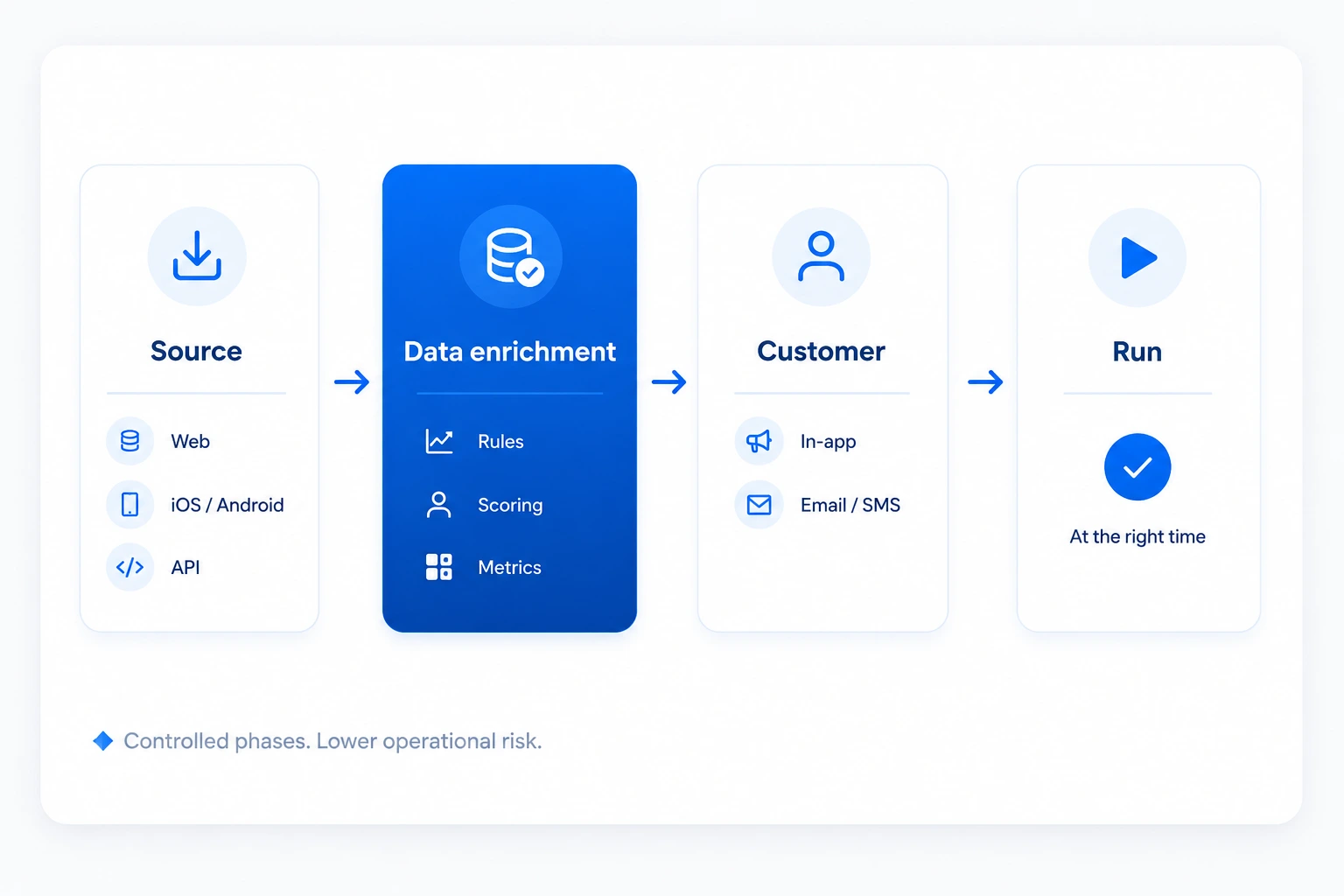
A big-bang switch breaks subscriptions at the worst moment, usually at renewal. Group customers by risk and validate each cohort before the next one moves.
It depends on subscription complexity and how many channels you run. A mirror-first migration lets you start in parallel within weeks, then move customers in cohorts at their own pace rather than one risky cutover.
No, when entitlement migration is separated from payment migration. Azotte becomes the access and lifecycle source of truth first, while Chargebee keeps billing, so access never depends on the payment cutover being finished.
Customers, plans and add-ons, subscriptions and status, renewal and billing-cycle anchors, coupons and discounts, and the IDs that map back to Chargebee. Invoice and revenue history stays preserved for finance and reconciliation.
No. Azotte runs alongside Chargebee. New subscriptions can start on Azotte while existing ones migrate cohort by cohort. Billing execution can stay on Chargebee until you choose to move it.
They get a dedicated path: preserved grace periods, no duplicate dunning, and a clean handoff into Azotte recovery once their cohort moves. Mid-recovery customers are never pushed through a standard import.