

Access-first architecture
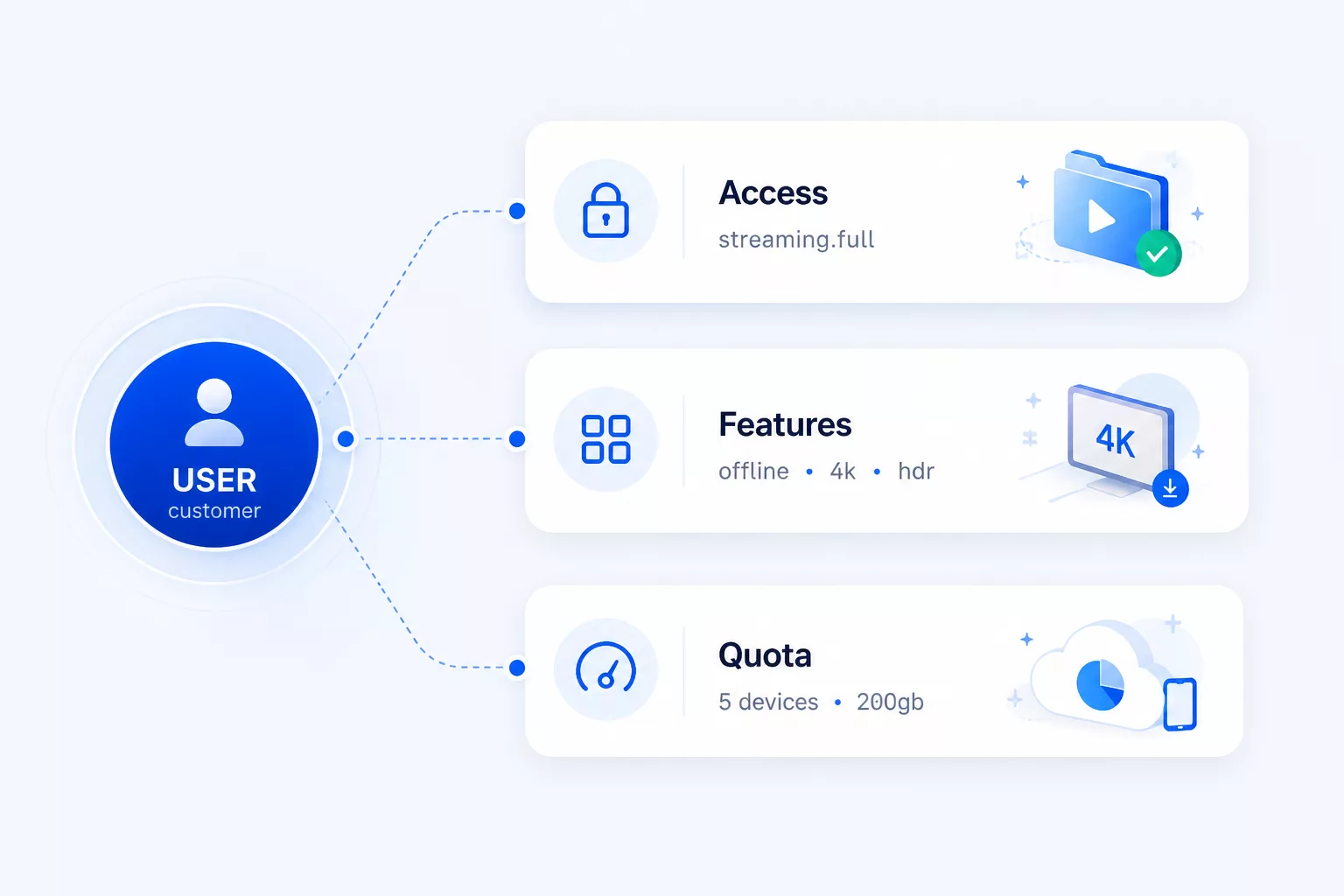
Azotte starts with what the customer receives: access, features, quotas, rights, and usage. Billing, pricing, campaigns, and support actions all follow from that single record.
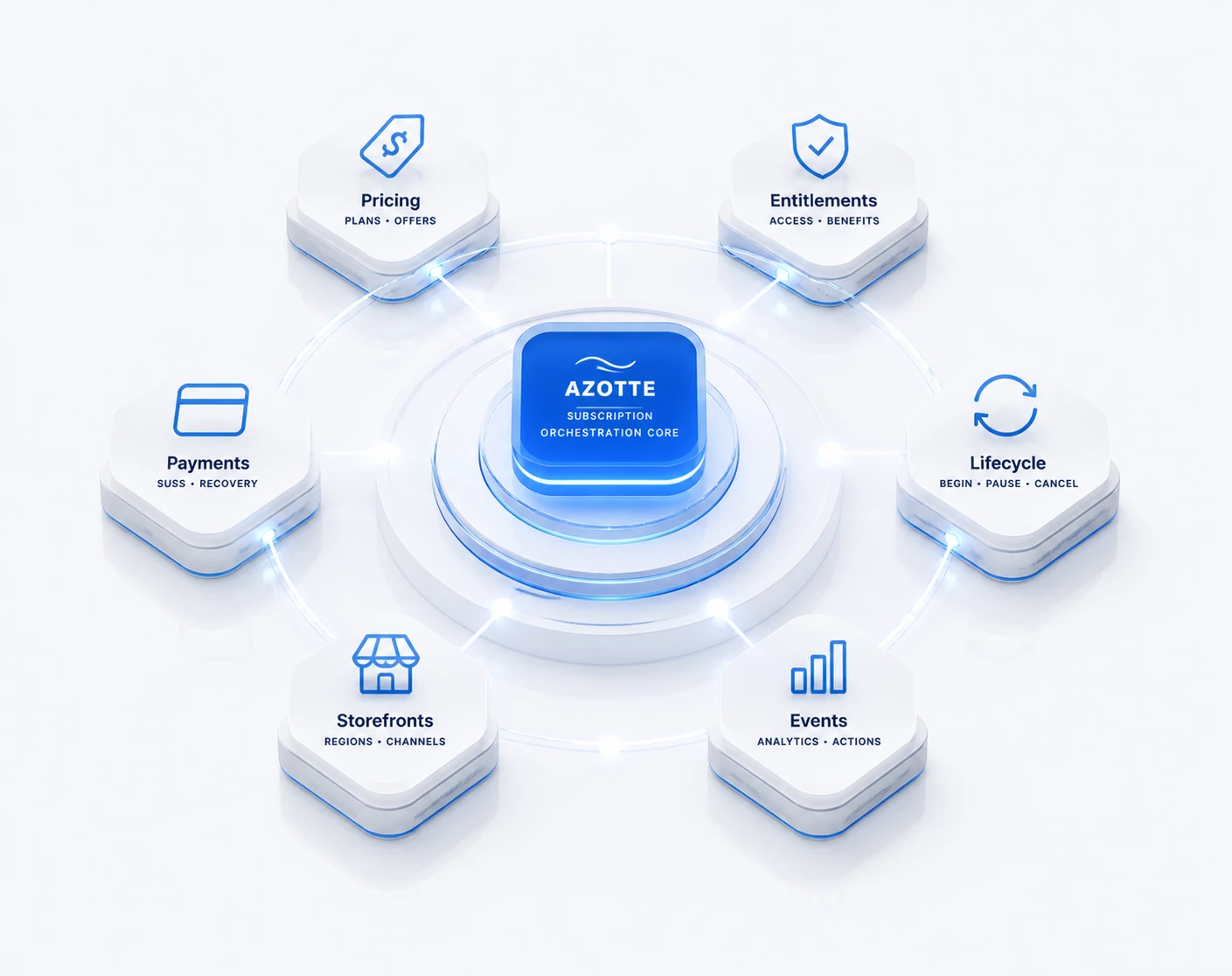
Azotte is the unified subscription backend for recurring revenue businesses. One operational platform for recurring billing, entitlement management, subscription lifecycle orchestration, payments, fiscalization, retention, and recovery, across every storefront, channel, and region.
Catalogs, recurring billing, payments, fiscal records, entitlements, and customer changes usually live in separate systems.
Azotte unifies them as centralized subscription logic on a shared lifecycle engine, so every subscription action follows the same rules across every storefront.
Value first. Logic centralized.Azotte operates as the orchestration and decision layer between regional commerce systems, customer applications, subscription lifecycle logic, payments, entitlements, recovery, analytics, and operational workflows.
Regional storefronts, PSPs, telecom systems, taxation, pricing, and fiscal providers operate independently while staying connected to one centralized subscription control layer.
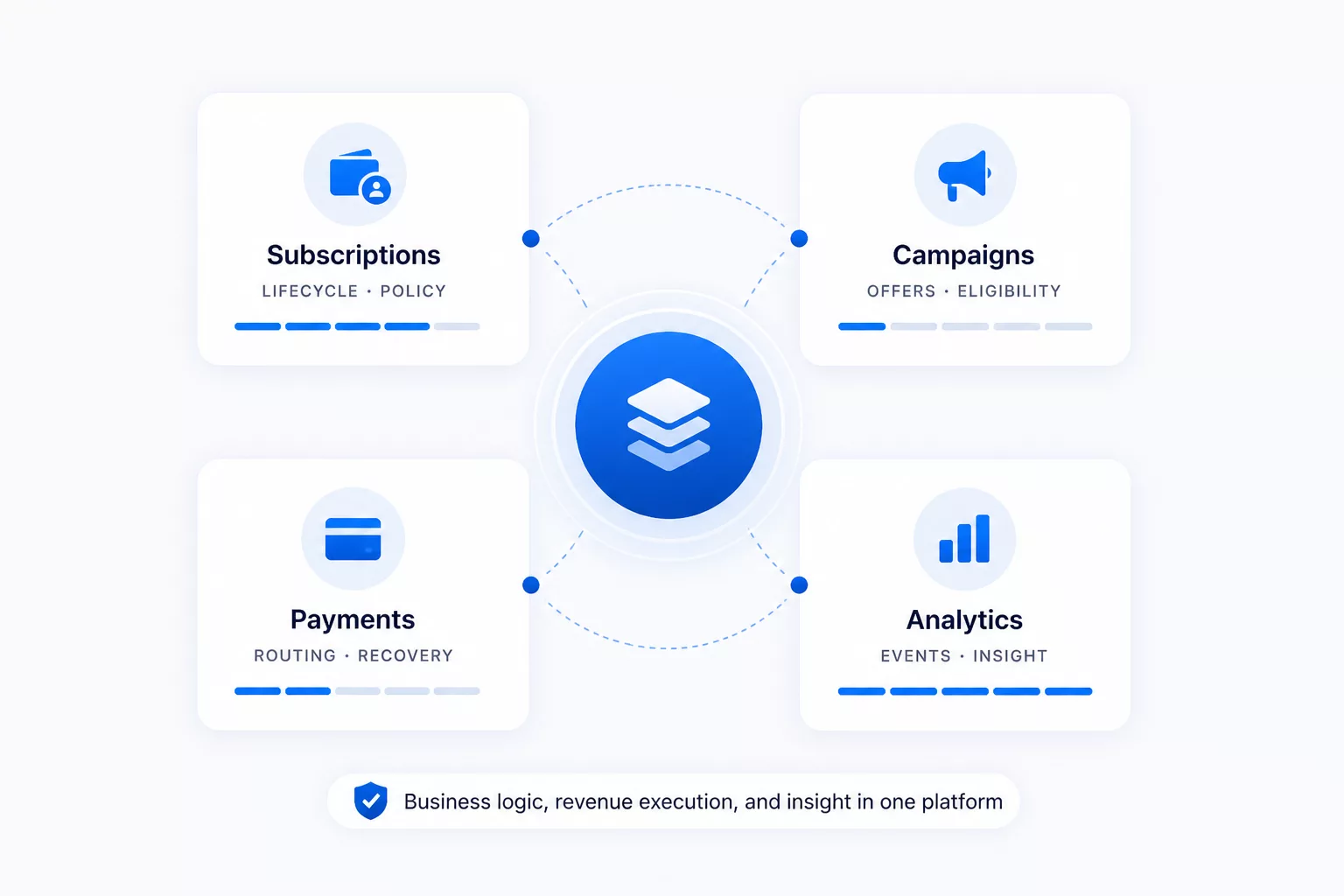
Subscription lifecycle orchestration, entitlements, billing, checkout, campaigns, notifications, analytics, and automation run from one governed operational platform.
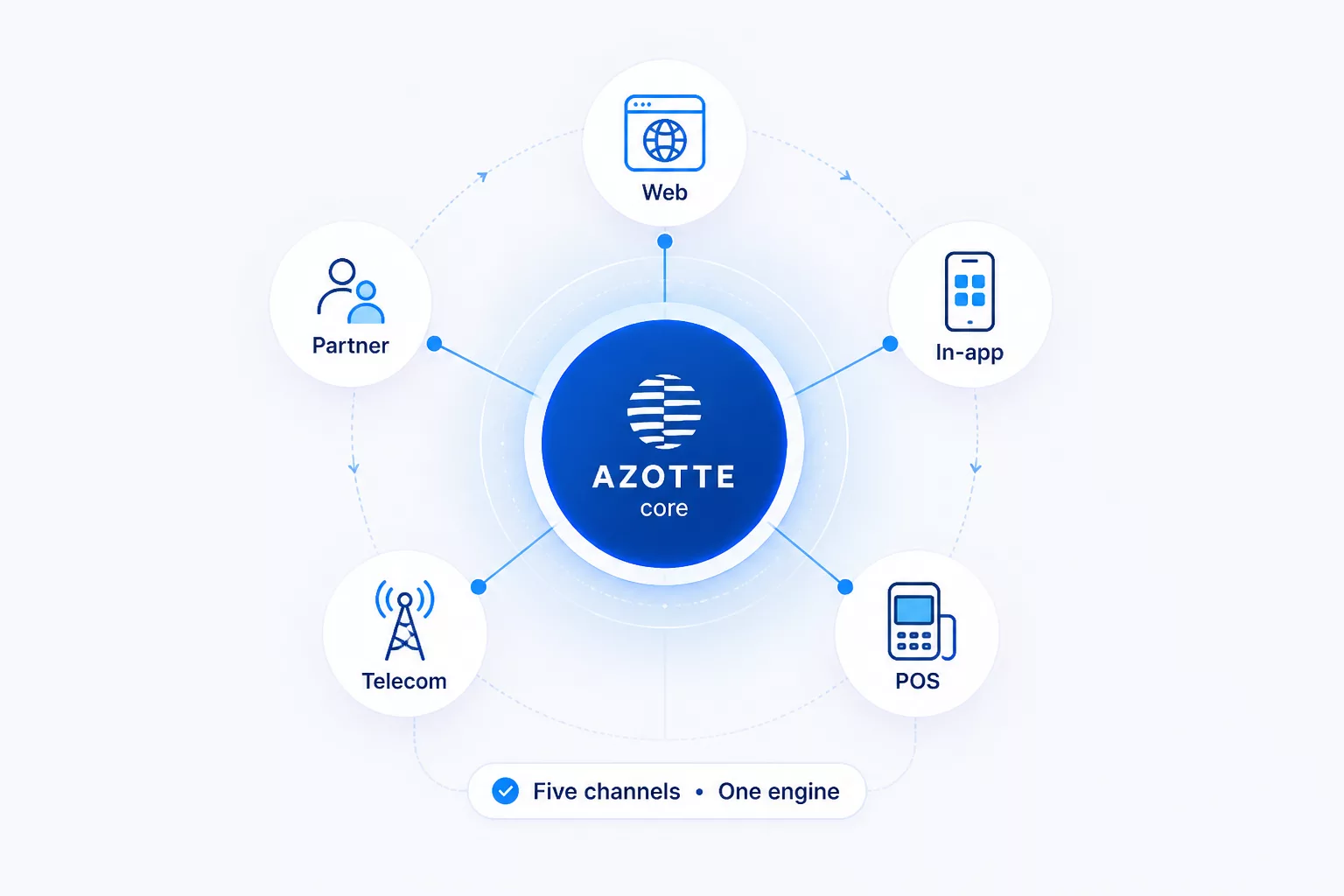
Web portals, mobile apps, backend systems, support tools, and customer experiences connect through APIs, events, and centralized subscription decisions.
Start with the area your team owns, then move across the same subscription logic: revenue, lifecycle, storefronts, payments, growth, and operations.
Subscriptions, bundles, access rights, catalog logic, and package rules start from one single record.
Unified subscriptions → Lifecycle & AccessTrials, renewals, upgrades, downgrades, pauses, cancellations, recovery, and access changes follow governed rules.
Subscription lifecycle → Channels & StorefrontsWeb, in-app, partner, telecom, and regional storefronts connect to the same subscription layer.
Multi-storefronts → Payments & CompliancePSPs, retries, fallback logic, payment states, tax events, and invoices stay tied to subscription actions.
Payments and checkout → Growth MotionsCampaigns, eligibility, trials, referrals, loyalty, price changes, and retention act on shared rules.
Growth engine → Data & OperationsCustomer operations, transactional outreach, lifecycle history, and analytics use the same event foundation.
Analytics and reporting →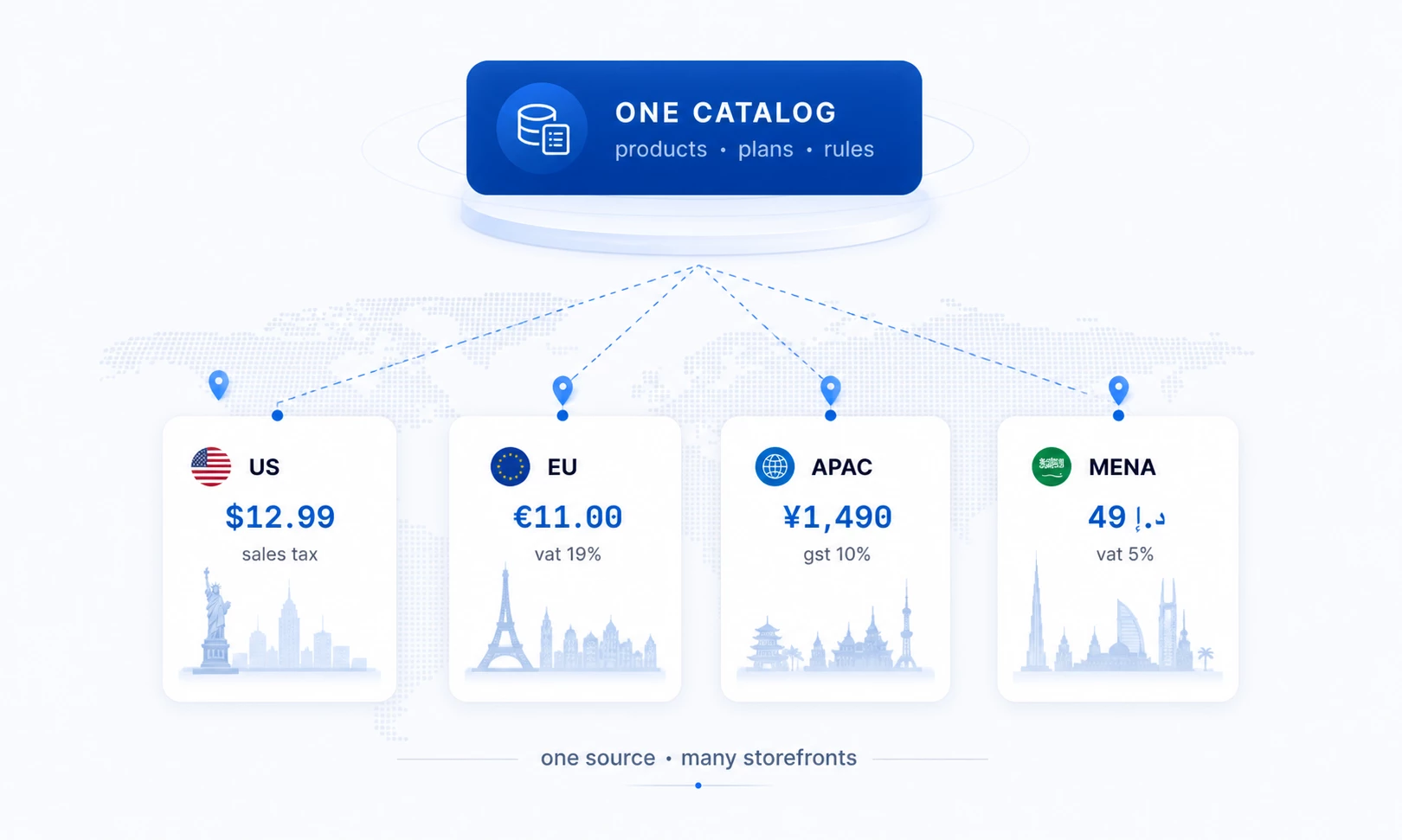
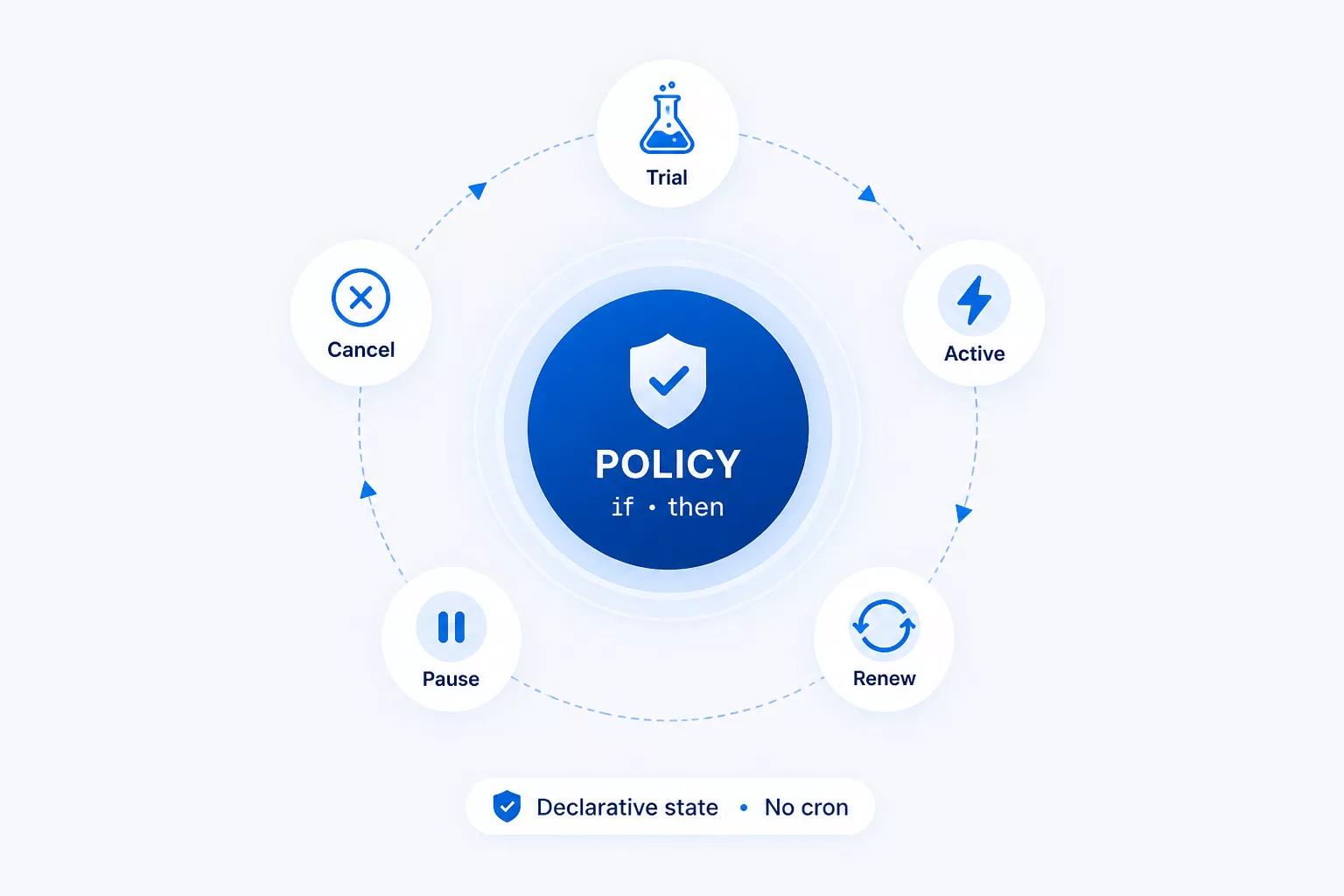
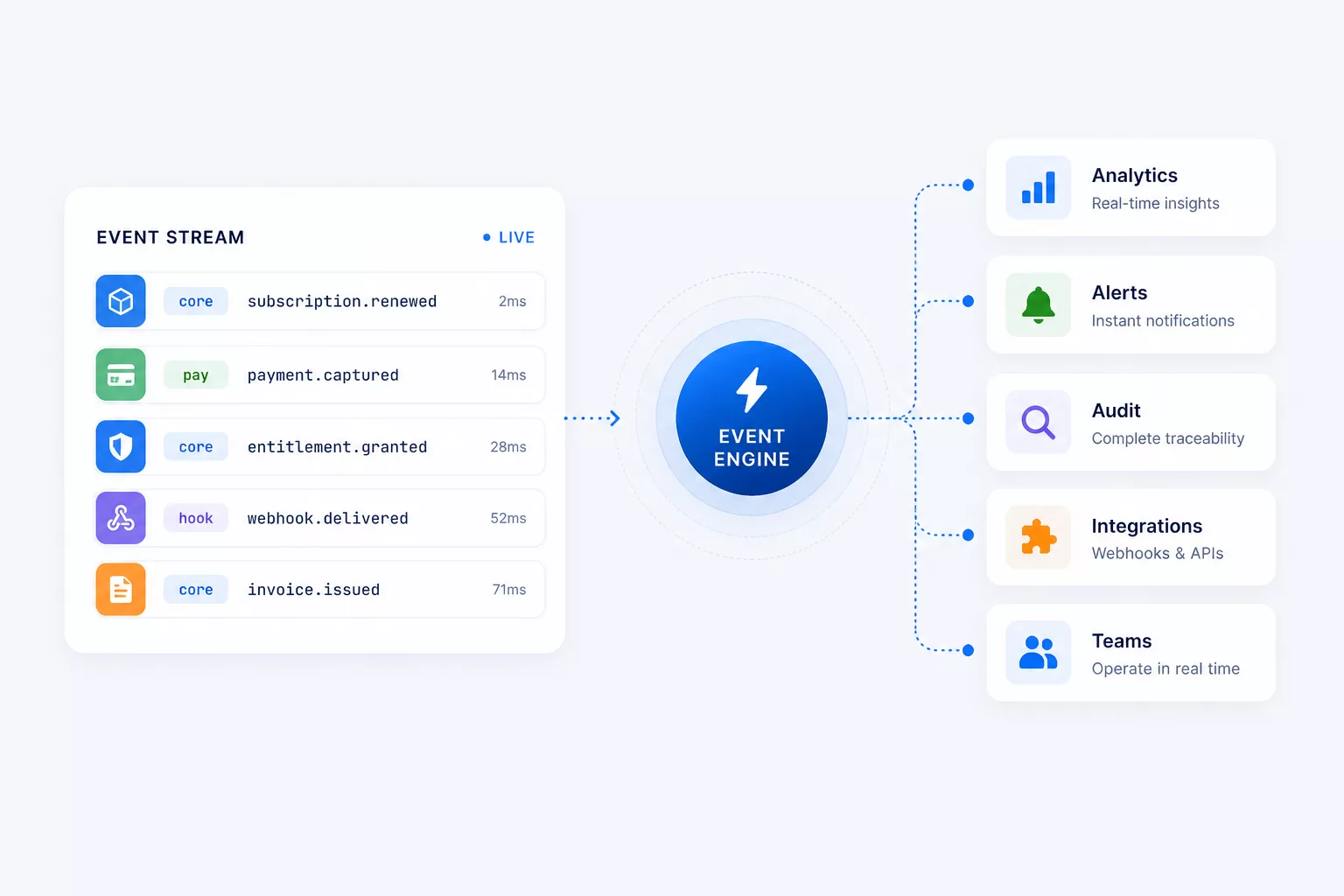
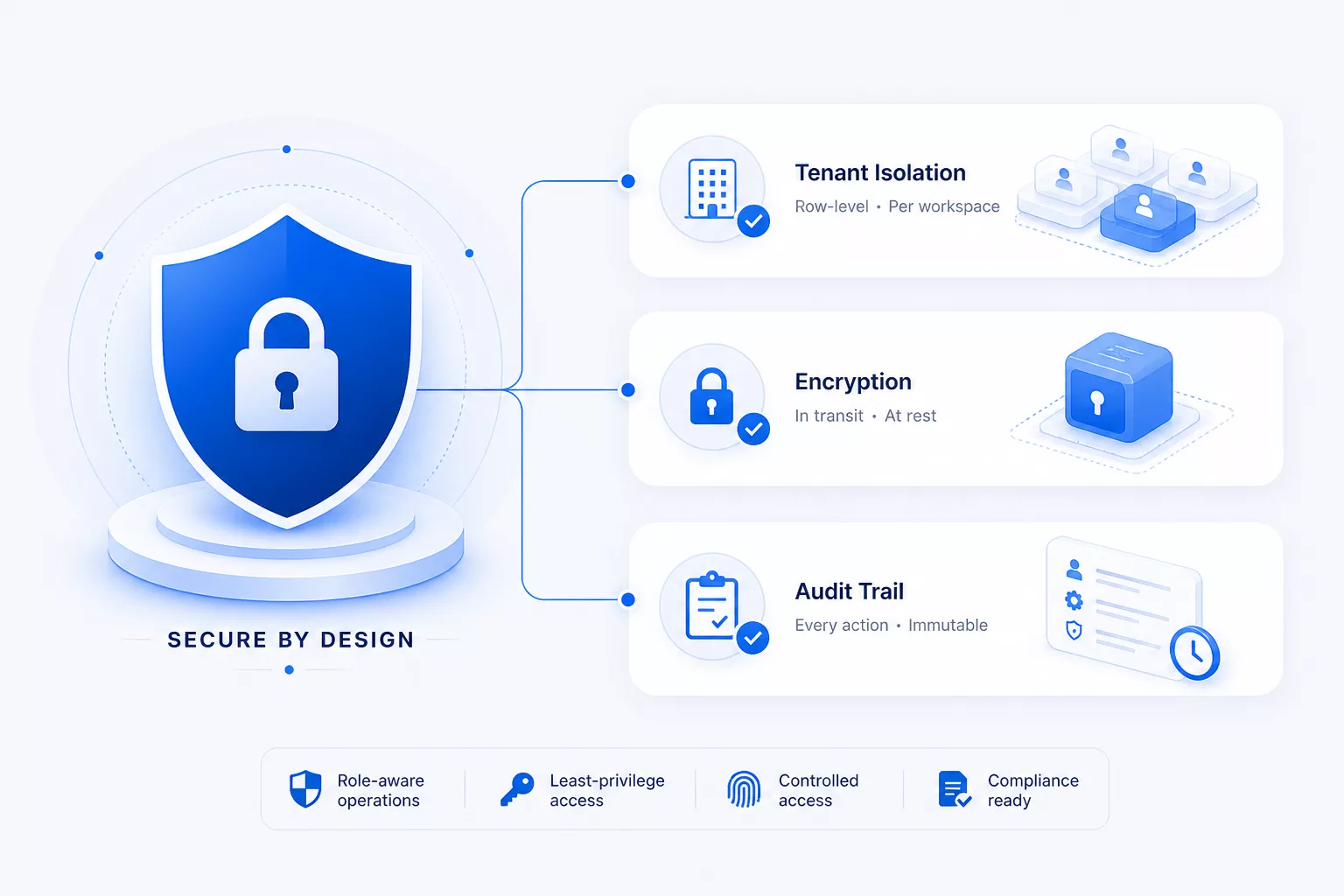
Azotte does not only record subscription changes. It controls the business logic behind them, then coordinates the operational work around them.
Define products, access rights, eligibility rules, offers, trials, price changes, renewals, upgrades, downgrades, and win-back journeys from one control layer.
Route payments across providers, retry failed transactions, apply fallback logic, trigger fiscal flows, and keep revenue actions consistent across storefronts.
Manage customers, subscriptions, payment methods, campaign performance, lifecycle events, and prepared analytics from Azotte Portal or your own tools.
Azotte helps subscription businesses migrate from existing billing, payment, and entitlement systems without rebuilding operations from scratch. Import customers, subscriptions, access rights, lifecycle history, payment references, storefront mappings, and legacy identifiers through guided workflows, APIs, and bulk migration pipelines.
Move one brand, storefront, or provider at a time while teams keep a clear path from source data to the new way of working.
Bulk pipelines, REST endpoints, and JSON-RPC flows bring in subscriptions, access rights, lifecycle records, and legacy identifiers.
Run phased migration paths for selected providers while recovery, pricing, and lifecycle policy stay coherent after cutover.
Migration is an operational capability inside the platform, not a separate product. See migration support →
Business teams and technical teams work on the same platform, with different levels of control.
Manage customers, subscriptions, cards, bundles, campaigns, and reports directly from Azotte Portal.
Integrate subscription logic into your backend, admin tools, support systems, and workflows.
Place ready-made subscription surfaces inside your portal without rebuilding everything.
All three models run on the same core: subscriptions, payments, campaigns, and lifecycle stay consistent everywhere.
Azotte gives product, finance, growth, support, and engineering teams one shared system for subscription operations.
Create bundles, access rights, package rules, storefront variations, regional pricing, and product structures from one catalog foundation.
Run promo codes, targeted offers, trials, loyalty flows, referrals, cooldowns, win-back campaigns, and lifecycle-based actions.
Connect PSPs, apply routing logic, manage failed payments, prepare invoice or fiscalization actions, and preserve the full transaction context.
Trigger email, SMS, and connected notifications for payment failures, renewals, trial endings, price changes, campaign actions, and customer updates.
Support teams can view customers, adjust subscriptions, inspect payment methods, follow lifecycle history, and act on recovery or retention needs.
Prepare clean revenue, subscription, campaign, payment, recovery, and customer behavior data for dashboards, reporting, and decision support.
Azotte routes subscriptions through the payment providers you choose per market. In high-cost regions a local provider often accepts cards below a global default and adds local methods, while billing, retries, and access stay unified.
Short answers to the questions teams ask before a deeper review.
Bigger. Billing is one outcome of management. Azotte governs subscriptions, access rights, bundles, campaigns, payments, fiscalization, transactional outreach, customer operations, and analytics as one connected business logic layer.
Azotte sits between your sales channels, payment providers, fiscal systems, communication tools, analytics stack, and internal management portals. It centralizes the rules and events that decide how subscription revenue operates.
Yes. You can manage operations in Azotte Portal, integrate through APIs, or embed selected Azotte widgets inside your own management portal.
Yes. Azotte supports customer and subscription operations, including subscription state, package changes, payment methods, lifecycle history, and recovery or retention actions.
No. Azotte can route across the PSPs you already use, add fallback logic, coordinate failed-payment recovery, and keep payment outcomes connected to subscriptions, fiscal flows, and analytics.
Yes. Azotte can trigger lifecycle-based transactional outreach through email, SMS, and connected providers for events such as renewals, failed payments, trial endings, price changes, campaign actions, and subscription updates.
Yes. The catalog defines what is sold. Storefronts apply local pricing, taxes, payment providers, rules, and customer experiences on top. One single record, many local execution paths.
Start with How It Works for the workflow, then Architecture for the modular, tenant-aware, event-based design.